People looking up how to make money with an AI clone usually want a workable method, not a passive-income story. The same question shows up as how to make money with an AI avatar or how to make money with a voice clone. An AI clone or avatar can help in three limited ways: you license a voice clone and get paid when other people use it, you use a video avatar to produce courses or client videos faster, or you set up an AI clone for businesses as a service. Pay is usage-based or project-based, and it is uneven. This is a methods overview, not a promise that a clone will replace a wage.
The same ground is sketched on AI clones and avatars on the AI hub. For earning money with AI, in general, and for other AI side hustles, start there and come back here for the clone-specific rules.
What an AI clone or avatar actually is
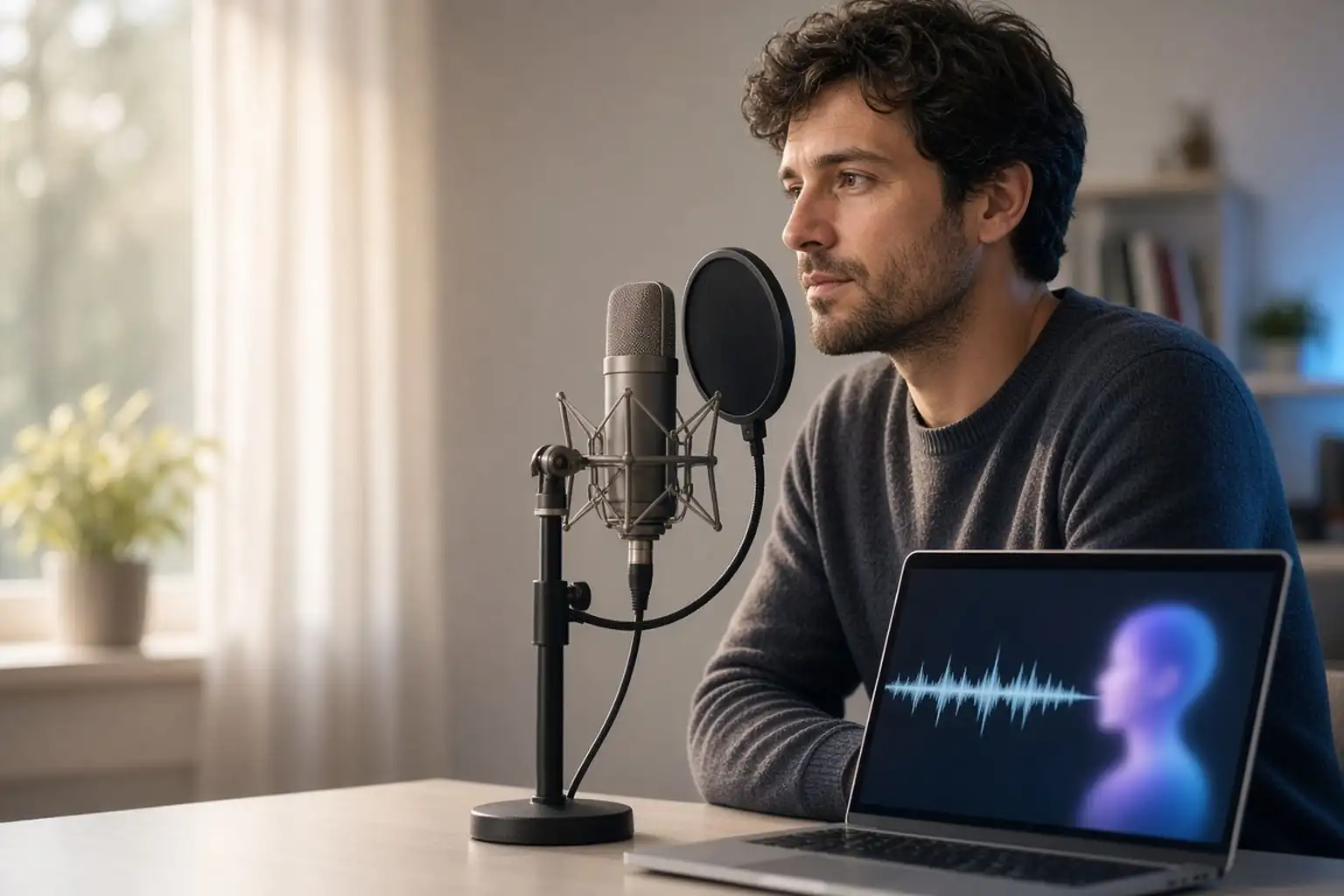
A voice clone is a model trained on recordings of a specific voice so software can speak new lines in that voice. It does not need the person in the room for every sentence, but it is only as good as the recordings, the script, and the platform’s limits.
A video avatar is a visual stand-in — a likeness of your face, or a designed character — that can deliver a script on camera. Some tools start from a short video of you; others animate a still image. The result can be useful for explainers and training clips. It is not a substitute for a live performance in every setting, and viewers can often tell.
A digital twin, in this context, is simply the combination: a voice and a likeness that can be reused. The phrase also means other things in industry (a model of a factory, a city, a machine). Here it only means a reusable AI version of how you sound or appear.
None of these is automatically a product, a client, or a payout.
License your own voice (marketplace payouts)
The clearest marketplace route today is to license your own voice. On ElevenLabs you can create a Professional Voice Clone, share it in the ElevenLabs Voice Library, and receive usage-based rewards when paid users generate audio with it. Those AI voice clone payouts depend on usage; they are not a rate card. Instant Voice Clones, and voices made with Voice Design, cannot go in the Voice Library.
Partner link: we may earn a commission, at no extra cost to you. Disclosure
A few mechanics matter more than any marketing page:
- Professional Voice Cloning is a paid-plan feature (currently the Creator plan or higher). Check the live plan list before you subscribe, because names and limits change.
- Rewards come from paid-user usage, not from free-tier generations. They are not a salary and they are not a booking fee.
- Payouts run through Stripe Connect, typically about once a week once you clear the platform minimum. In most cases that minimum is $10; some countries set a higher threshold. Stripe is not available in every country, and tax forms (W-9 or W-8) may be required before money is released.
- Your default reward rate depends on the notice period you choose when you share the voice — how long existing users can keep using it after you withdraw it. That is a tradeoff, not a growth hack.
This is a licence, not a job. What you earn depends on whether paid users pick your voice, for how much audio, and on terms you should read in the Voice Library addendum before you publish. For the human, booked-by-the-project version of the same skill, see human voiceover work.
Use a video avatar to make courses or client videos faster
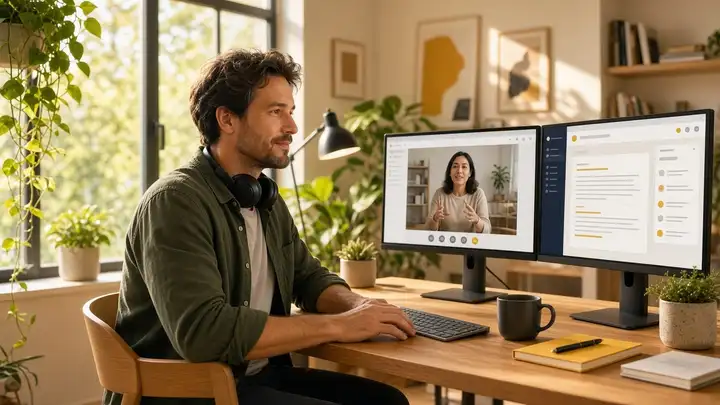
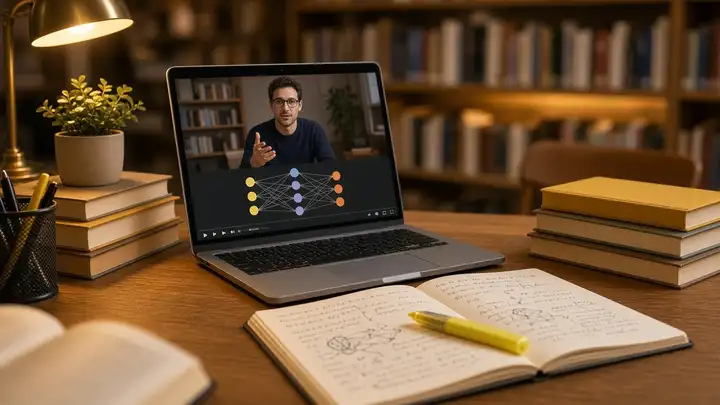
A video avatar is leverage for people who already have something to say: a lesson, an onboarding script, a product walkthrough. It can cut repeat filming, help if you are not always able to sit in front of a camera, and make it easier to update a line without reshooting a whole module. Selling AI avatar videos, or using them in a course, still requires a buyer and a distribution plan. The avatar is not, by itself, a channel or an audience.
HeyGen and Synthesia are the tools this site already names for this job. They are not affiliates here, so those are ordinary links. Both charge subscription or usage fees; both have their own consent and likeness rules; both need a clear script and a pass for accuracy, names, and tone. Budget time for that pass. An avatar that mispronounces a client’s product is still your problem.
If the videos are meant to earn, the clone is only the production shortcut. Monetisation still depends on how creators actually get paid: a course, a client retainer, a membership, or a similar offer with a real buyer.
Set up clones for businesses as a service
The service is not “I will make you an AI.” It is a finished outcome a business can use: an onboarding video in the founder’s voice, a training module that can be updated without a new film day, or an after-hours voice for routine messages. Scope the deliverable, the languages, the revisions, and what happens if the platform changes its model or its terms.
Two documents should travel with the work: a written release from the person whose voice or face you are cloning, and a short usage policy that states where the clone may be used, where it may not, and how synthetic media will be labelled. Do not start the build until both are signed.
Price the setup as project work, not as a royalty you have not negotiated. Price the setup work by the hour so you can see whether the fee covers recording, training, edits, and a revision round. For pricing and scoping a service more generally, use the freelancing hub.
Consent, labels, and platform rules
Clone only yourself, or a client who has signed a written release. That is the whole rule, and it is the one most “just try this tool” posts skip. Recording someone, scraping a podcast, or imitating a public figure to sell a service is how people get accounts closed and, in some places, sued. Voice-likeness law is uneven; the Vanderbilt Law School explainer Cloned Without Consent is a clear starting point, not legal advice.
Read each platform’s allowed-use rules before you upload a sample or deliver a file. ElevenLabs, HeyGen, Synthesia, and any host where you later post the video all have their own bans (deception, prohibited content, and, on voice marketplaces, rules against sharing instant or synthetic voices as if they were a verified professional clone).
Label synthetic media wherever a viewer would reasonably expect a real person: a course intro, a company announcement, an advert, a customer-service message. A small on-screen or in-script note is usually enough. If you would be uncomfortable watching the clip without knowing it was generated, the label is not optional.
Costs, plans, and why payouts stay uneven
Expect a subscription or usage fee for any serious clone, plus time. ElevenLabs currently recommends a large set of clean, single-speaker recordings for a Professional Voice Clone (on the order of a couple of hours), then a verification step and a review before a voice can appear in the Library. Video-avatar tools typically want a short filmed sample or a still, and they charge by seat, minute, or credit. Those plan names, prices, and recording rules change. Verify them on the provider’s site before you pay.
Library rewards and usage fees are not a wage. A voice can sit in a library and earn very little; a video avatar does not find students or clients on its own. There is no honest “hours to first dollar” figure for this work. If a page quotes someone else’s payout screenshot, treat it as marketing, not a forecast.
A fitting course, if you want a walkthrough
If you want a single, tool-focused walkthrough rather than assembling the steps yourself, Create Your AI Clone: Your Digital Twin for Creating Videos on Udemy (by Kush Sharma, last updated January 2026 when we checked) walks through building a likeness and voice for video, including HeyGen and ElevenLabs. It is a paid course, clearly a product, and it will not create demand for your videos. Check the curriculum still matches the tools you plan to use; those products move quickly.
You do not need a course to start. If you want free background on AI tools first, see our list of free AI courses.
FAQ
Can I clone someone else’s voice?
Only with a signed release from that person, and only if the platform allows it. Marketplace payouts on ElevenLabs are designed around a Professional Voice Clone of your voice. Cloning a client for a business video is a service with paperwork, not a shortcut around consent. Do not clone a public figure, a colleague, or a recording you found online.
Are Voice Library payouts passive income?
No. After the initial recording, verification, and listing, you may not be doing daily production work, but the money is still usage-based, often small, and can stop if users move on, if you withdraw the voice, or if the platform changes its terms. That is not a wage and it is not “set and forget” income.
Do I have to label AI avatars?
Where a viewer would expect a real person, yes — label the clip. Platforms and advertising rules increasingly require it, and it is the honest default even when a rule is vague. Training videos, ads, and anything that could be mistaken for a live endorsement should say they are synthetic.
How is this different from ordinary voiceover work?
Ordinary human voiceover work is a booking: a client hires you for a script, a usage, and a fee. An AI voice clone is a licence to a model, or a production tool that helps you deliver a video faster. The first is priced like freelance work. The second is priced like software usage or like a project to set the clone up. They can sit side by side; one does not automatically replace the other.