
Most lists of ways to make money online read like a lottery brochure. This one is shorter on promises and longer on how the money actually arrives. Every method below has paid actual people. None of them pays everyone, and almost all of them start slower than the internet suggests.
So treat this as a map, not a menu. Read the ten options, notice which ones match a skill you already have and the hours you can give, and pick one to test for a month. Each section ends with a link to the topic hub where we go deeper, with a tutorial, an article, a book and a course for that path. If you would rather include offline work such as dog walking, tutoring or renting out a parking space, our list of 17 ways to earn money in 2026 covers both.
The ten options at a glance
| Method | Startup cost (estimate) | Skill level | Time to first payment (estimate) |
|---|---|---|---|
| 1. AI services | Low | Medium | Weeks |
| 2. Freelancing and remote work | Very low | Medium to high | Weeks |
| 3. Online shop and dropshipping | Medium (store, samples, ads) | Medium | Weeks to months |
| 4. Content creation | Low | Medium | Months |
| 5. Online courses and digital products | Low | Medium | Months |
| 6. Investing, trading and crypto | Money you can afford to lose | Medium to high | Not a wage; returns vary and can be negative |
| 7. Surveys, microtasks and user testing | None | Low | Days to weeks |
| 8. A blog or niche website | Low | Medium | Months to a year |
| 9. Affiliate marketing | Low | Medium | Months |
| 10. Print on demand | Low (samples) | Low to medium | Weeks to months |
10 ways to make money online that still work in 2026
1. AI: ChatGPT, Claude, Gemini & co.
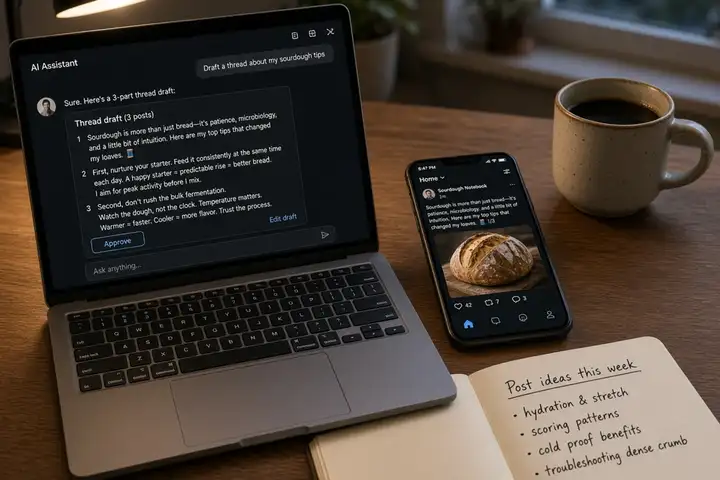
The big AI assistants are now ordinary work tools. ChatGPT, Claude and Gemini can draft, summarise, translate, write code and run multi-step tasks on their own. That is exactly why “I use AI” is not something anyone will pay for. Clients pay for a finished, checked result that happens to be faster or cheaper because you used AI well.
A few ways that work in practice:
- AI-assisted freelance services. Product descriptions for one industry, help-centre articles written from a client’s own documents, research briefs, transcript clean-up, translation editing. You sell the outcome and you check every line before it ships.
- Automation for small businesses. Many owners would happily pay to stop copying data between their inbox, spreadsheet and invoicing tool. Workflow tools like Zapier, Make or n8n, with an AI step in the middle, cover a lot of it. A support chatbot that answers routine customer questions, built on a tool like Tidio, is another easy job to explain to a shop owner. Our guide to making money with AI agents walks through finding that first client and pricing the work. If you would rather test and evaluate other people’s prompts and chatbots, see our guide to prompt testing and AI evaluation. For simpler starting offers, see 10 simple AI services people pay for.
- Small tools and apps. Coding agents have made it realistic for non-developers to build a booking page, an internal dashboard or a simple browser extension. Start with something you or a client needs, not with a startup idea.
- Voice and avatar work. If you have a good voice, platforms like ElevenLabs let you license a professional voice clone and earn when others use it, and video tools like InVideo turn a script and a voice into explainer or avatar videos for clients. Payouts vary a lot. Our guide on how to make money with an AI clone covers consent and labelling, and what is realistic.
- Teaching other people. Plenty of teams want a half-day workshop on using these tools safely in their own job. If you are already the person colleagues ask, that is a service. Our list of free AI courses is a cheap way to fill the gaps first.
Partner link: we may earn a commission, at no extra cost to you. Disclosure
The catches: models still invent facts and sources, and if you publish the output under your name, the mistake is yours. Do not paste a client’s private data into a consumer chatbot unless your agreement allows it. Marketplaces and search engines are also getting better at spotting low-effort AI content, so mass-produced articles or ebooks are a poor bet.
2. Freelancing and remote work
Freelancing is still the fastest route from a skill to a first payment online, because you sell hours or projects people already budget for. Writing, design, video editing, bookkeeping, development and virtual assistance all have steady demand. Marketplaces like Upwork and Fiverr give you access to clients worldwide, though competition is fierce and fees take a meaningful cut. Regional platforms and your own network often pay better once you have a few reviews.
Pick a narrow offer you can describe in one sentence (“monthly bookkeeping for small cafés”, “short-form edits for podcast clips”) and show two or three samples. A focused profile wins more work than a long list of everything you can do. When you are ready to leave the platforms, a simple portfolio site and direct referrals keep more of the fee.
3. An online shop and dropshipping
Selling physical products online is easier to set up than ever and harder to make profitable than it looks. Hosted platforms like Shopify or the free WooCommerce plugin for WordPress get a store live in a weekend. The hard part is everything after: product photos, returns, customer service and, above all, getting visitors without paying for every click.
Dropshipping, where a supplier ships straight to your customer, removes the stock risk but leaves thin margins and slow delivery complaints. Supplier apps such as Spocket, which plugs into Shopify, handle the product catalogue and shipping. It works best with a product you have used yourself and a niche you can reach without ads, for example through a community you already belong to. Budget for samples and some failed products before anything sticks.
Topic hubEarn money online: An online shop
4. Content creation and the creator economy
YouTube, TikTok, Instagram, podcasts and newsletters can all pay, but rarely from views alone. On YouTube, ad revenue requires the YouTube Partner Program, which has subscriber and watch-time thresholds, and most creators earn more from sponsorships, affiliate links and their own products than from ads. Some platforms pay nothing directly at all: our guide to making money on Threads explains what that app does and does not pay, and our guide to making money on X covers the payout rules that replaced Revenue Sharing in 2026.
The creators who last tend to pick one platform and one topic, publish on a schedule they can keep, and build an email list early so they are not at the mercy of one algorithm. A newsletter is a sensible second channel next to any social account. Expect months of publishing before brands notice you.
5. Online courses and digital products
If you can teach something people struggle with, from spreadsheet modelling to watercolour basics, a course, template or ebook lets you sell the same work many times. Marketplaces like Udemy bring the audience but control much of the pricing and take a large share (its own Online Course Masterclass walks you through building a first course). Platforms like Teachable and Gumroad let you keep more and set your own price, but you have to bring the buyers.
Start small. A focused template or a one-hour mini course you can finish in a few weeks teaches you more about what sells than a 40-lesson epic. Specific beats general: “budget template for freelancers with irregular income” is a product, “budget template” is a crowded search result.
6. Investing, trading and crypto
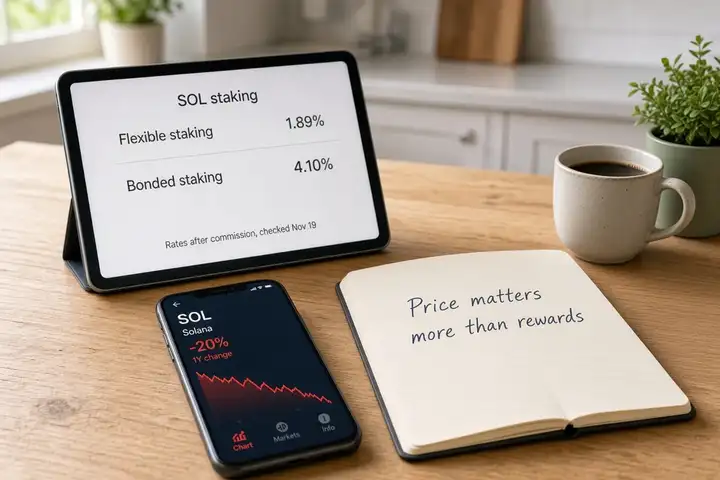
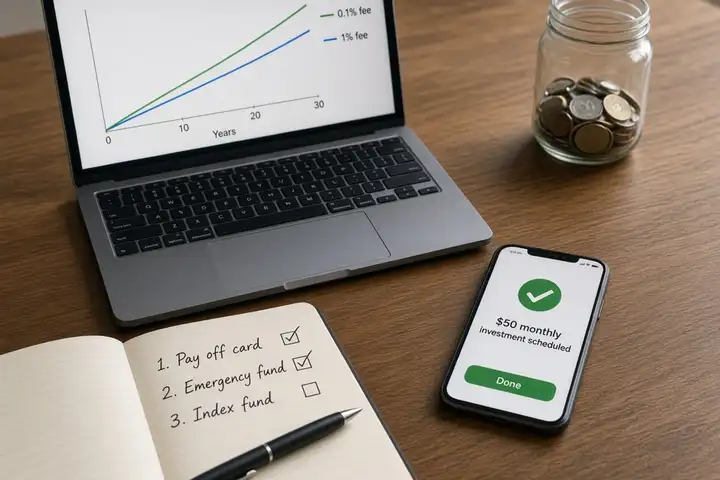
Investing is a way to grow money you already have, not a way to earn money from nothing, and it belongs on this list with that warning attached. Broad, low-cost index funds held for years are the boring option that has historically worked for most people; our guide to investing with little money covers the order, the fees and the catches. Active stock trading and crypto trading are a different game: most short-term traders lose money once fees and taxes are counted, and crypto prices can fall sharply in days.
If you go ahead, use a regulated broker, and for crypto a reputable exchange that is licensed in your country, such as Kraken or Bitpanda, and read its fee schedule before you deposit. Our beginner’s guide to making money with crypto shows what fees and commissions take from staking rewards. Fractional property platforms such as AKRU sell small shares of real estate, but who can invest depends on where you live, shares can be hard to sell quickly, and rents and property values can fall. Our cryptocurrency trading page explains day, margin, swing and futures trades and their risks. Only risk money you can afford to lose. This is not financial advice.
7. Online surveys, microtasks and user testing
Surveys, microtasks and get-paid-to (GPT) sites are the easiest way in and the lowest-paid. Sites like Swagbucks, Prolific for academic studies, and Amazon Mechanical Turk pay small amounts for short tasks, and availability depends heavily on where you live. Work out your hourly rate after a week. It is often well below minimum wage.
User testing, where you record yourself trying a website or app and talk through what confuses you, usually pays better per hour, though tests come in irregularly. Never pay to join a survey or task site, and treat any “earn hundreds a day from your phone” offer as a red flag. Our check of which money apps are legit compares minimum payouts and payout times.
8. A blog or niche website
A website you own is the one online asset no platform can switch off. A blog or niche site answers specific questions in one topic area, such as home espresso, budget travel in one region or bookkeeping for tradespeople, and earns through display ads, affiliate links, sponsorships or a product of your own once enough people find it through search. A shared host such as Bluehost is a common starting point for a WordPress site; the monthly fee is small next to the time you will spend writing.
It is slow. Expect months of steady publishing before search traffic shows up, and AI answers at the top of search results now take some clicks that used to go to websites; our look at whether blogging is still profitable has the survey figures. What still works is first-hand experience: your own photos, tests, prices and mistakes, which a generic AI summary cannot copy. Pick a topic you could write fifty useful articles about, start an email list from day one with a tool like Kit or beehiiv, and expect the first year to build the site, not pay you. Once the list is large, a sender that charges by email volume, such as MailCheap, can cost less than per-subscriber pricing, though it is newer and worth testing with a small send first.
Topic hubBlogging & affiliates: Starting the site
9. Affiliate marketing
Affiliate marketing pays you a commission when someone buys through your link. It suits people who already publish something useful: a blog, a YouTube channel, a newsletter or a comparison site. The links are the easy part. The work is building content that people find through search or follow by choice, and recommending products you would use yourself.
Amazon Associates is an easy first program because almost anything you write about is sold there, though its commission rates are low. Software companies and larger brands usually run their programs through networks such as Impact or PartnerStack. Commissions vary widely, from a few percent on retail purchases to recurring payments on software, and cookies expire. Advertising rules in most countries require you to disclose affiliate links clearly, and readers trust you more when you do.
Topic hubBlogging & affiliates: Affiliate marketing
10. Print on demand
Print on demand (POD) lets you sell your designs on t-shirts, mugs, posters and phone cases without holding stock. When an order comes in, a print partner makes and ships it. With an integrator such as Printful or Printify, the free plan has no monthly fee: you pay for each item and its shipping only when it sells, and your margin is whatever you charge above that.
That margin is often a few dollars per item, so volume and a clear niche matter more than a clever design. Designs aimed at a specific group, such as a hobby, a profession or an in-joke, tend to sell better than generic slogans. Check trademarks before you upload anything with a brand, character or famous phrase on it. If you make things by hand instead, our guide on how to sell handmade jewelry on Etsy walks through Etsy’s fees with a full example.
Topic hubDigital products: Print on demand
How to choose your first one
Start with what you already have. A skill points to freelancing or AI services, an audience points to affiliates or digital products, and a few spare evenings with no clear skill point to user testing while you learn something sellable. Give one method a fixed test of 30 to 60 days, track the hours as well as the money, and decide with actual numbers in front of you. Once you have picked one, our hub covers all the ways to make money online in more depth, with a tutorial, a book and a course for each channel.
Results vary widely, and nothing here guarantees income. What tends to separate the people who earn from those who give up is not the method. It is picking one, staying with it long enough to learn, and being clear-eyed about what the numbers say.